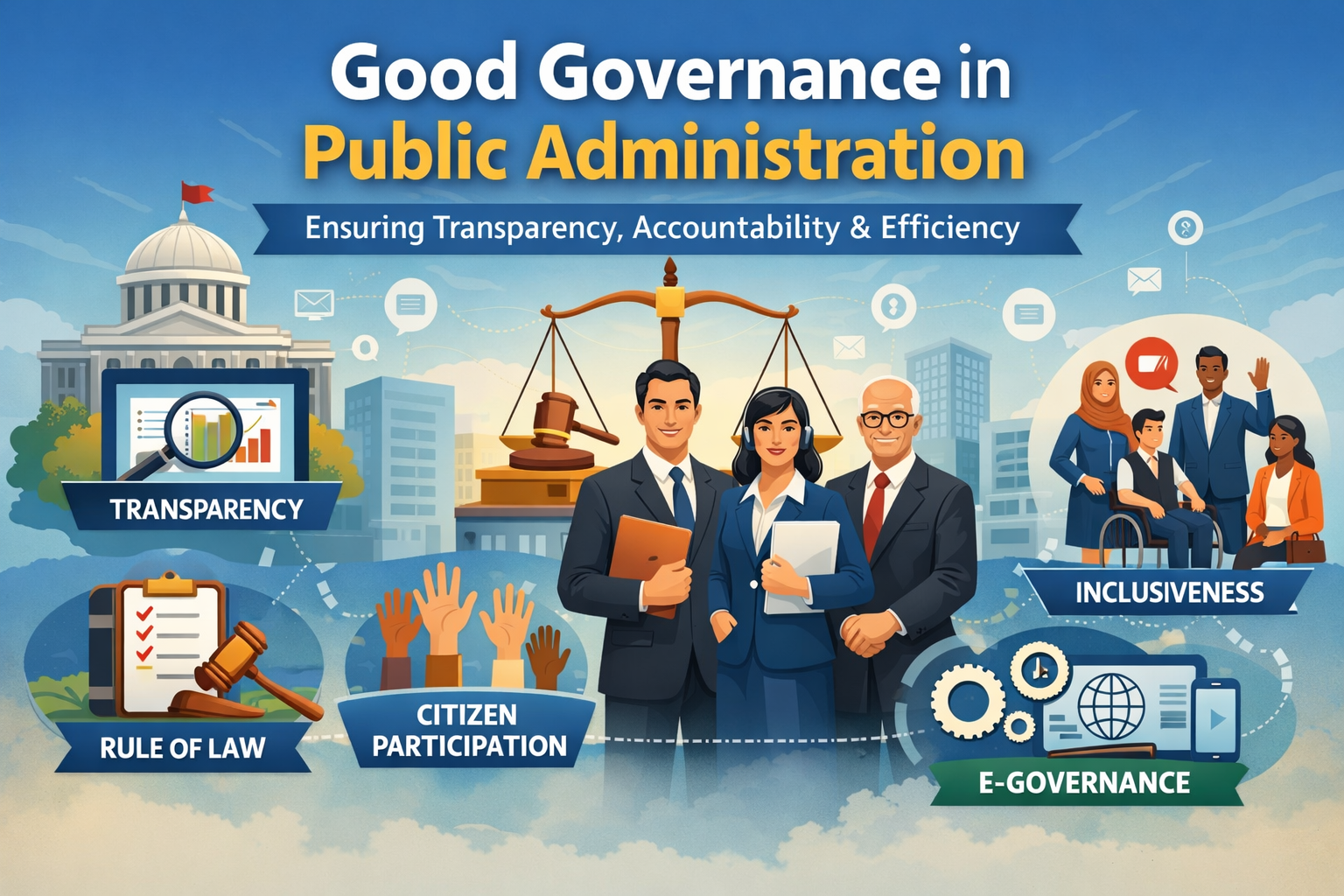
Good governance in public administration refers to the way public institutions conduct public affairs, manage public resources, and guarantee the realization of citizens’ rights. It emphasizes transparency, accountability, efficiency, inclusiveness, and the rule of law in decision-making and service delivery.
In simple terms, good governance ensures that the government works for the people—fairly, ethically, and effectively.
Meaning of Good Governance in Public Administration?
Good governance is not just about policies and laws; it is about how power is exercised in managing a country’s social, economic, and administrative resources.
In public administration, good governance means:
- Decisions are taken in the public interest
- Institutions are responsive and accountable
- Rules are applied fairly and consistently
- Public officials act with integrity and professionalism
Key Principles of Good Governance
1. Transparency in Governance
Transparency ensures that government decisions, processes, and data are open and accessible to citizens. Clear communication builds trust and reduces corruption in public administration.
Example: Public access to government budgets, tenders, and policies.
2. Accountability of Public Institutions
Accountability means that public officials and institutions are answerable for their actions. Effective accountability mechanisms improve administrative efficiency and ethical governance.
Includes:
- Legislative oversight
- Audits and vigilance bodies
- Citizen grievance redressal systems
3. Rule of Law
Good governance is impossible without the rule of law. Laws must be applied equally, protecting citizens’ rights while ensuring justice and fairness.
4. Participation and Inclusiveness
Citizen participation is central to democratic governance. Inclusive decision-making ensures that marginalized groups are heard and public policies reflect diverse societal needs.
5. Effectiveness and Efficiency
Public administration must deliver quality services with optimal use of resources. Efficient governance reduces delays, waste, and bureaucratic red tape.
6. Responsiveness
A responsive administration listens to citizens and addresses issues promptly. This strengthens public trust and improves service delivery outcomes.
Importance of Good Governance in Public Administration
Good governance plays a critical role in:
- Improving public service delivery
- Reducing corruption and misuse of power
- Strengthening democratic institutions
- Promoting sustainable development
- Enhancing citizen trust in government
Without good governance, even well-designed policies fail at the implementation stage.
Role of Civil Servants in Ensuring Good Governance
Civil servants are the backbone of public administration. Their commitment to ethics, neutrality, and professionalism directly impacts governance quality.
Key responsibilities include:
- Ethical decision-making
- Policy implementation with integrity
- Citizen-centric service delivery
- Upholding constitutional values
Challenges to Good Governance
Despite its importance, good governance faces several challenges:
- Corruption and lack of transparency
- Political interference
- Administrative inefficiency
- Weak accountability systems
- Limited citizen awareness
Addressing these challenges requires institutional reforms, capacity building, and ethical leadership.
Good Governance and Digital Public Administration
E-governance has become a powerful tool for promoting good governance by:
- Enhancing transparency
- Improving service accessibility
- Reducing human discretion
- Strengthening citizen engagement
Digital governance supports efficiency while empowering citizens.
Conclusion
Good governance in public administration is essential for a just, transparent, and inclusive society. It ensures that government institutions function ethically, efficiently, and in alignment with public welfare.
Ultimately, good governance transforms administration from a power-centric system into a people-centric system, strengthening democracy and sustainable development.