Ethics play a decisive role in shaping effective public service leadership. In public administration, leaders are entrusted with authority, public resources, and decision-making power that directly affect citizens’ lives. Ethical leadership ensures that this power is exercised responsibly, transparently, and in the public interest.
In an era of increasing public scrutiny, misinformation, and declining trust in institutions, ethics are no longer optional—they are essential for good governance, accountability, and sustainable development.
Understanding Ethics in Public Service Leadership
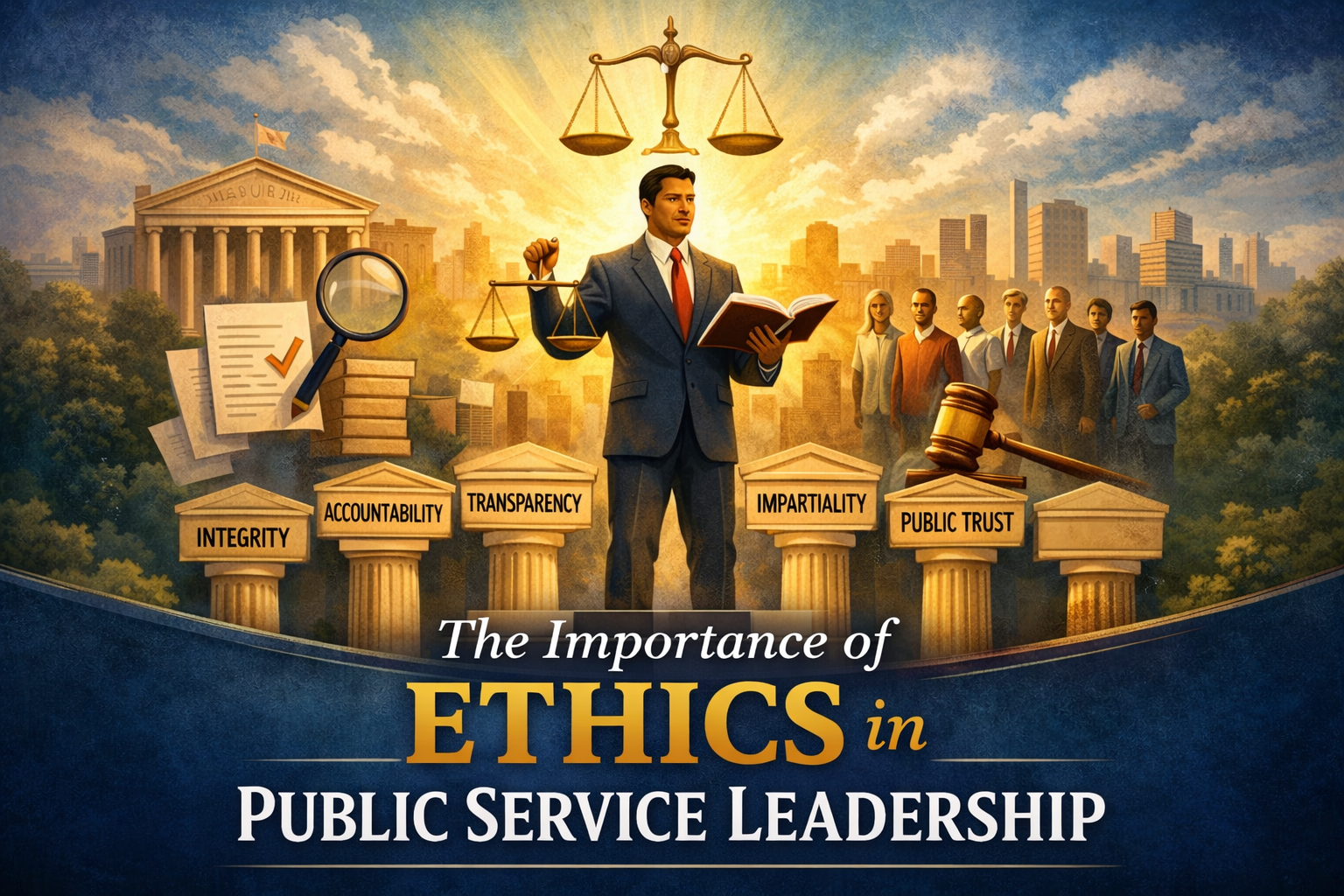
Ethics in public service leadership refer to the moral principles and standards that guide the behavior, decisions, and actions of public officials. These include values such as:
-
Integrity
-
Accountability
-
Transparency
-
Impartiality
-
Commitment to public welfare
Ethical leaders prioritize public interest over personal gain, ensuring fairness in policy implementation and service delivery.
Why Ethics Matter in Public Service Leadership
1. Building Public Trust and Credibility
Trust is the backbone of democratic governance. Ethical public service leaders build confidence among citizens by demonstrating honesty, fairness, and consistency in decision-making. When leaders act ethically, institutions gain legitimacy and public cooperation improves.
2. Enhancing Transparency and Accountability
Ethical leadership promotes transparent processes and accountability mechanisms. Leaders who follow ethical norms are more likely to:
-
Share information openly
-
Accept responsibility for decisions
-
Prevent misuse of public resources
This reduces corruption and strengthens institutional integrity.
3. Improving Quality of Public Service Delivery
Ethics directly influence the effectiveness of public service delivery. Ethical leaders focus on citizen-centric governance, ensuring that policies and services are inclusive, equitable, and responsive to public needs.
When ethics guide leadership:
-
Service delivery becomes fairer
-
Marginalized groups receive attention
-
Administrative efficiency improves
4. Strengthening Decision-Making in Complex Situations
Public service leaders often face ethical dilemmas involving competing interests, limited resources, and political pressure. Ethical frameworks help leaders make balanced decisions rooted in justice, legality, and moral responsibility rather than short-term gains.
Ethical leadership ensures consistency even when decisions are difficult or unpopular.
5. Preventing Corruption and Abuse of Power
One of the most critical reasons ethics matter in public service leadership is corruption prevention. Ethical leaders establish strong moral cultures within institutions, discouraging malpractice, favoritism, and abuse of authority.
By setting ethical examples, leaders influence organizational behavior at every level.
Role of Ethics Training in Public Service Leadership
Ethics are not only innate values but also skills that can be nurtured through structured training. Institutions like IC Centre for Governance emphasize ethics-based capacity building through:
-
Ethics training programmes
-
Leadership development modules
-
Case studies on public policy challenges
-
Reflective and participatory learning methods
Such initiatives help leaders internalize ethical values and apply them in real-world governance scenarios.
Ethics and Sustainable Governance
Ethical public service leadership contributes to long-term governance sustainability. When leaders uphold ethical standards, policies remain consistent, institutions become resilient, and social trust deepens—creating a virtuous cycle of responsible governance.
Ethics ensure that development is inclusive, environmentally conscious, and aligned with constitutional values.
Conclusion: Ethics as the Soul of Public Service Leadership
Ethics matter in public service leadership because they define how power is exercised and for whose benefit. Ethical leaders strengthen democracy, enhance service delivery, prevent corruption, and restore faith in public institutions.
In a rapidly changing governance landscape, ethical leadership is not just a moral imperative—it is a strategic necessity for effective and citizen-focused public administration.