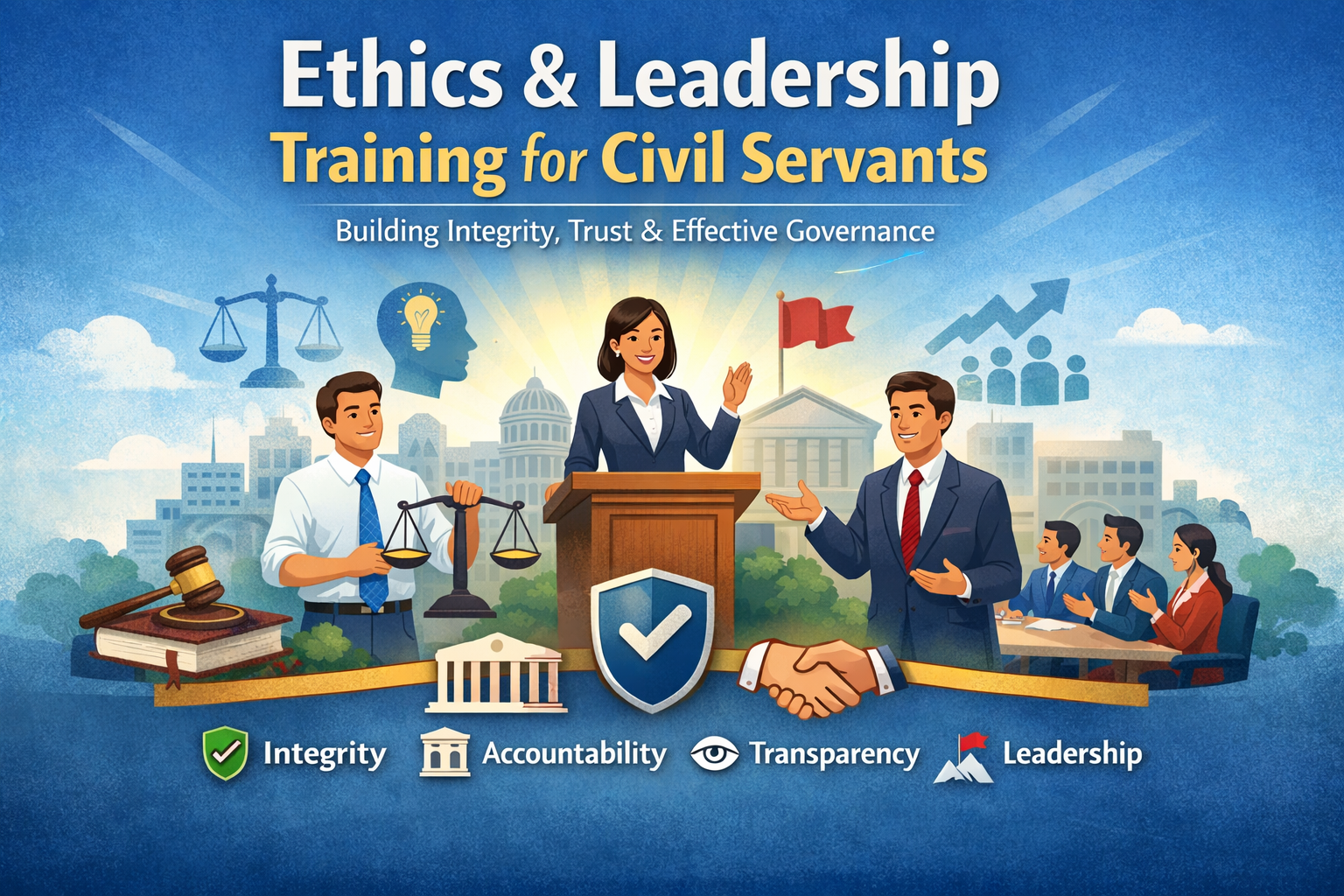
Effective governance depends not only on sound policies and efficient systems but also on the ethical values and leadership qualities of civil servants. In an era marked by complex public challenges, rising citizen expectations, and rapid socio-economic change, training for civil servants in ethics and leadership has become a cornerstone of good governance and sustainable public administration.
Well-designed training programmes help public officials strengthen moral judgment, enhance leadership competence, and foster a service-oriented mindset that prioritizes integrity, transparency, and accountability.
Why Ethics and Leadership Training Is Essential for Civil Servants
Civil servants operate at the intersection of law, policy, and public trust. Their decisions affect millions of lives, making ethical conduct and strong leadership indispensable.
Key reasons why such training is critical include:
-
Building public trust through transparent and fair decision-making
-
Preventing corruption and misuse of power
-
Enhancing decision-making in morally complex situations
-
Strengthening accountability within public institutions
-
Improving service delivery through empathetic and values-driven leadership
Ethics and leadership training equips officials to act responsibly—even under pressure—and to lead by example.
Ethics in Public Service: The Foundation of Governance
Ethics in public service goes beyond compliance with rules. It is about doing the right thing, even when no one is watching. Structured training in ethics helps civil servants:
-
Understand core values such as integrity, impartiality, compassion, and justice
-
Recognize ethical dilemmas in real administrative situations
-
Apply ethical frameworks to policy formulation and implementation
-
Balance authority with responsibility
A comprehensive programme on Ethics in Public Services provides civil servants with conceptual clarity and practical tools to navigate ethical challenges while serving the public interest.
Leadership Development for Effective Public Administration
Leadership in the public sector is distinct from corporate leadership. It requires the ability to inspire trust, manage diverse stakeholders, and work within democratic and institutional constraints.
Ethics-based leadership training focuses on:
-
Values-driven leadership rather than power-centric authority
-
Emotional intelligence and empathy in public decision-making
-
Conflict resolution and consensus building
-
Vision-driven governance aligned with constitutional values
By nurturing ethical leadership, training programmes help civil servants become change-makers who guide institutions toward long-term public good.
Creating an Ethical Work Culture Through Training
Individual ethics flourish best in supportive institutional environments. Training programmes play a vital role in shaping an ethical work culture across government organizations.
Such training helps to:
-
Promote integrity and accountability at all levels
-
Encourage ethical behavior as a shared responsibility
-
Reduce tolerance for unethical practices
-
Strengthen teamwork and mutual respect
Programmes focused on Ethical Work Culture emphasize collective values, ethical leadership, and organizational responsibility—ensuring that ethics become embedded in everyday administrative practice.
Key Components of Ethics and Leadership Training Programmes
High-impact training for civil servants typically includes:
-
Case studies based on real governance challenges
-
Interactive discussions and group exercises
-
Leadership self-assessment and reflection
-
Policy ethics and decision-making frameworks
-
Inner governance and self-awareness modules
This participatory approach ensures that learning is practical, reflective, and directly applicable to administrative roles.
Long-Term Impact on Governance and Society
Investing in ethics and leadership training yields far-reaching benefits:
-
More responsive and citizen-centric governance
-
Stronger institutional credibility
-
Reduced ethical lapses and governance failures
-
Empowered civil servants with moral clarity and leadership confidence
Ultimately, such training strengthens democracy by aligning public administration with the values of justice, fairness, and service to society.
Conclusion
Training for civil servants in ethics and leadership is not a one-time intervention but a continuous process of personal and institutional growth. By nurturing ethical awareness, leadership competence, and an ethical work culture, public institutions can deliver governance that is both effective and humane.
In a rapidly evolving world, ethically grounded and visionary civil servants are essential for building resilient institutions and restoring public faith in governance.