Putting Citizens at the Heart of Governance
Citizen-centric governance is a transformative approach that places people—not procedures—at the core of public administration. By designing policies, services, and systems around citizens’ needs and experiences, governments can significantly improve service delivery, build trust, and strengthen democratic accountability. In an era of rising expectations and digital transformation, citizen-centricity is no longer optional—it is essential.
What Is Citizen-Centric Governance?
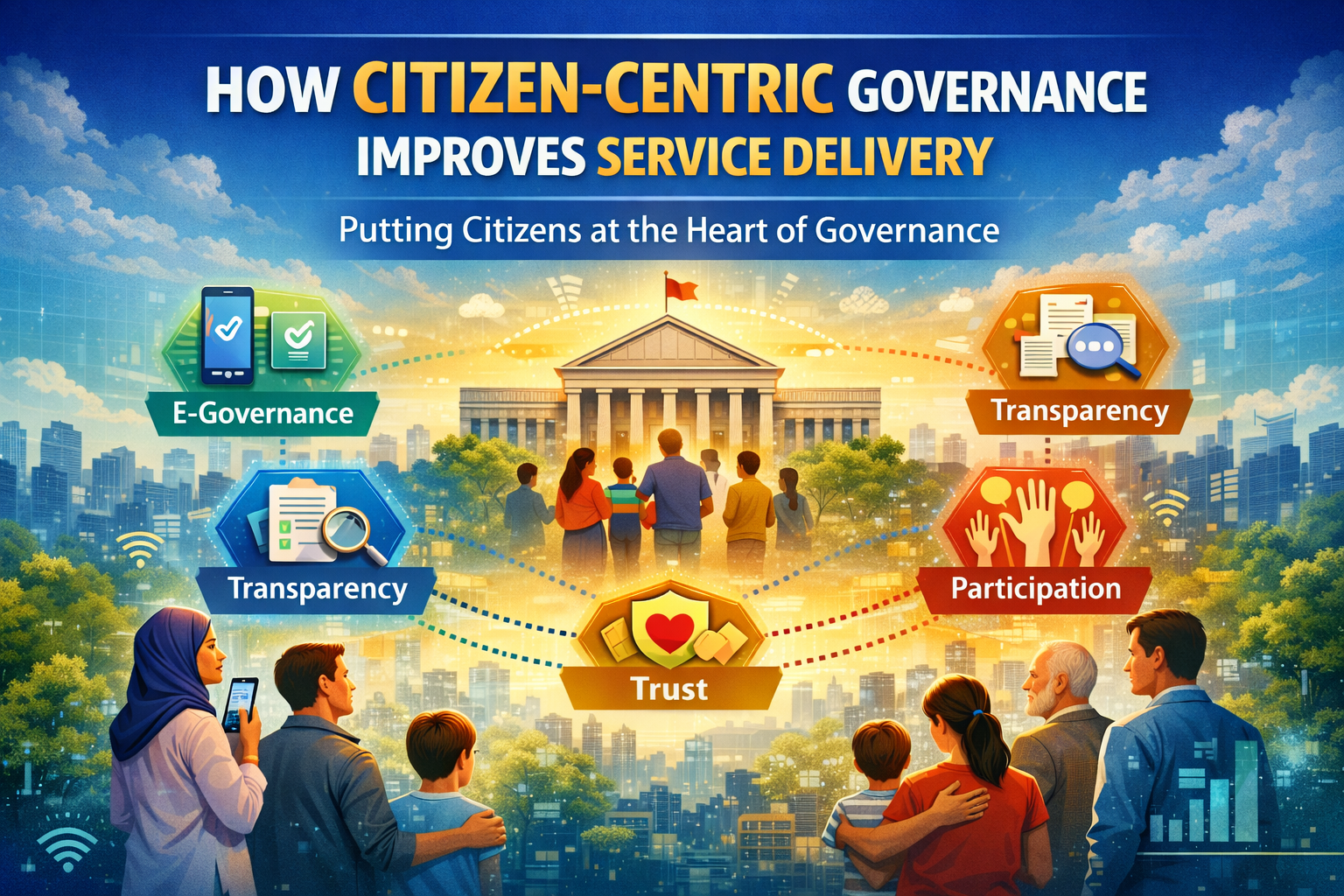
Citizen-centric governance focuses on understanding and responding to the real needs of citizens. It emphasizes accessibility, responsiveness, transparency, and participation across the policy and service lifecycle—from design and delivery to feedback and continuous improvement.
Key principles include:
-
Responsiveness: Services adapt to citizens’ needs and contexts.
-
Transparency: Clear information, open processes, and accountable outcomes.
-
Participation: Citizens contribute to policy design and evaluation.
-
Equity & Inclusion: No one is left behind, especially vulnerable groups.
How Citizen-Centric Governance Improves Service Delivery
1. Better Alignment with Real Needs
When citizens are consulted through surveys, town halls, or digital platforms, services are tailored to actual problems rather than assumptions. This alignment reduces waste, shortens delivery timelines, and improves satisfaction.
2. Enhanced Accessibility and Convenience
Simplified procedures, single-window systems, and digital platforms (e-governance) make services easier to access. Online applications, real-time tracking, and mobile-friendly portals reduce travel, paperwork, and waiting time—especially for rural and marginalized communities.
3. Greater Efficiency and Cost Savings
By redesigning services around user journeys, governments eliminate redundant steps and streamline workflows. Automation and data-driven decision-making improve turnaround times and optimize resource allocation.
4. Improved Transparency and Accountability
Publishing service standards, timelines, and outcomes empowers citizens to hold institutions accountable. Grievance redressal mechanisms and dashboards foster trust and deter corruption.
5. Higher Citizen Trust and Engagement
When citizens experience reliable, respectful, and timely services, trust in public institutions grows. This trust encourages collaboration, compliance, and constructive feedback—creating a virtuous cycle of improvement.
Role of Technology in Citizen-Centric Service Delivery
Digital tools are powerful enablers of citizen-centric governance. E-governance platforms, open data portals, and AI-assisted helpdesks improve speed, accuracy, and personalization. However, technology must be inclusive—supported by digital literacy initiatives and offline alternatives to ensure universal access.
Challenges to Implementing Citizen-Centric Governance
Despite its benefits, implementation can face hurdles:
-
Institutional resistance to change
-
Digital divides limiting access
-
Capacity gaps among frontline staff
-
Data privacy and security concerns
Overcoming these requires leadership commitment, capacity building, ethical frameworks, and continuous citizen engagement.
Best Practices for Effective Citizen-Centric Governance
-
Co-create services with citizens and civil society
-
Measure outcomes using citizen satisfaction and service-level indicators
-
Train public officials in empathy, ethics, and service design
-
Close the feedback loop by acting on citizen inputs
-
Ensure inclusivity through multilingual, accessible channels
Conclusion: From Service Providers to Service Partners
Citizen-centric governance transforms governments from rule-bound service providers into responsive service partners. By centering policies and processes on citizens’ lived experiences, public institutions can deliver faster, fairer, and more effective services—ultimately strengthening trust, legitimacy, and the quality of governance itself.